

|
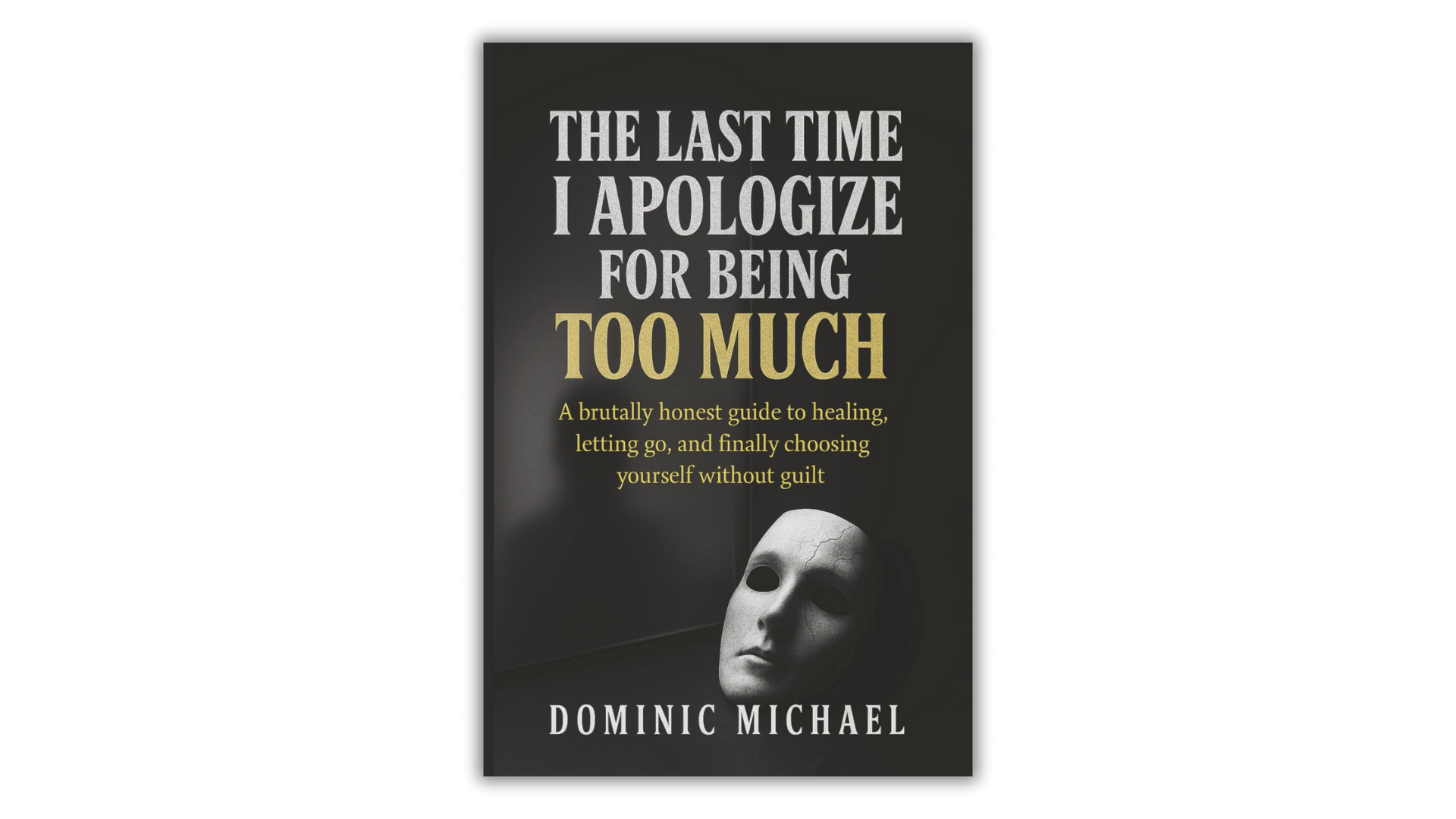
In a culture where over-apologizing is often mistaken for humility and self-critique is worn like a badge of honour, The Last Time I Apologize for Being Too Much is a refreshing — and for some, revelatory — call to rethink how we relate to ourselves and others.
Dominic Michael’s book is not just another self-help manual; it is an unapologetic manifesto urging readers to end the cycle of self-effacement and emotional depletion.
What This Book Sets Out to Do
From its title alone, this book promises a reckoning: it invites readers who feel they’ve been “too much” — too emotional, too loving, too sensitive — to stop shrinking themselves for others. The core assertion Michael advances is simple yet powerful:
You were never “too much” — you were just giving too much to people who gave you nothing back.
This theme runs throughout the book, which Michael positions as a wake-up call for anyone who has:
- Over-explained their feelings
- Stayed loyal to emotionally unavailable people
- Mistaken patience for self-betrayal
- Accepted breadcrumbs and called it love
Instead of offering gentle reassurance that keeps you hoping things will get better with “just a little more effort,” the author challenges you to examine why you keep loving where your love isn’t reciprocated.
Key Concepts and Takeaways
Michael’s approach is less about comfort and more about truth — even when it’s uncomfortable. Some of the major concepts he tackles include:
1. Emotional Intelligence Isn’t a Burden — But It Can Be Mistreated
The book explores how emotionally intelligent people often get punished — not for being kind, but for investing too much in people who aren’t capable of mutual depth. Michael frames this not as a weakness but as misplaced effort.
2. Manipulation Often Hides Behind “Charm and Mixed Signals”
One of the insightful threads throughout the work is the idea that manipulation isn’t always obvious or malicious — it can be subtle, cloaked in confusion and intermittent affection, trapping one in cycles of hope and disappointment.
3. Consistency Trumps Chemistry
The author emphasizes that true relational health is not about chemistry or intensity alone — it’s sustained, consistent mutual care. Many of us romanticize chemistry while overlooking the absence of consistency, leading to emotional burnout and unresolved attachment.
4. Boundaries Are Not Punishment
Rather than treating boundaries as cold, punitive measures, Michael reframes them as acts of self-respect — a way of stopping the cycle of apologizing for having needs.
Writing Style and Tone
Michael’s tone throughout is direct, unapologetic, and sometimes confrontational — not in a way that shames you, but in a way that halts self-deception. This isn’t a book that tells you to stay soft for people who keep hurting you. Instead, it draws a line in the sand: no more chasing, no more explaining, no more shrinking.
For readers used to gentle self-help encouragement, this book may feel like a punch — but that’s intentional. Michael’s choice to eschew platitudes in favour of radical honesty makes this book stand out in a crowded field of emotional wellness titles.
Who Will Benefit Most from This Book
This book will resonate strongly with readers who:
- Feel emotionally exhausted by giving more than they receive
- Have struggled with saying “no” or setting healthy boundaries
- Carry guilt for asserting their standards
- Are ready to stop apologizing for who they are
It’s not merely a book on healing but a guide for internal restructuring — teaching you to anchor self-worth outside of validation from others.
Potential Limitations
Critics of the book (and similar works) might argue that the tone can feel too blunt for those who are in earlier stages of emotional recovery. The uncompromising style might be overwhelming if you aren’t yet ready to confront deep patterns of over-giving. Still, many will find this a necessary catalyst for transformation.
Final Thoughts
The Last Time I Apologize for Being Too Much is a bold invitation to reclaim emotional agency. Through no-nonsense guidance and unflinching introspection, Dominic Michael encourages us to stop minimizing ourselves for acceptance and start valuing consistency, boundaries, and mutual respect.
For those tired of bearing the emotional burden alone and ready to choose themselves without guilt, this book offers not just insight — but empowerment.