

|
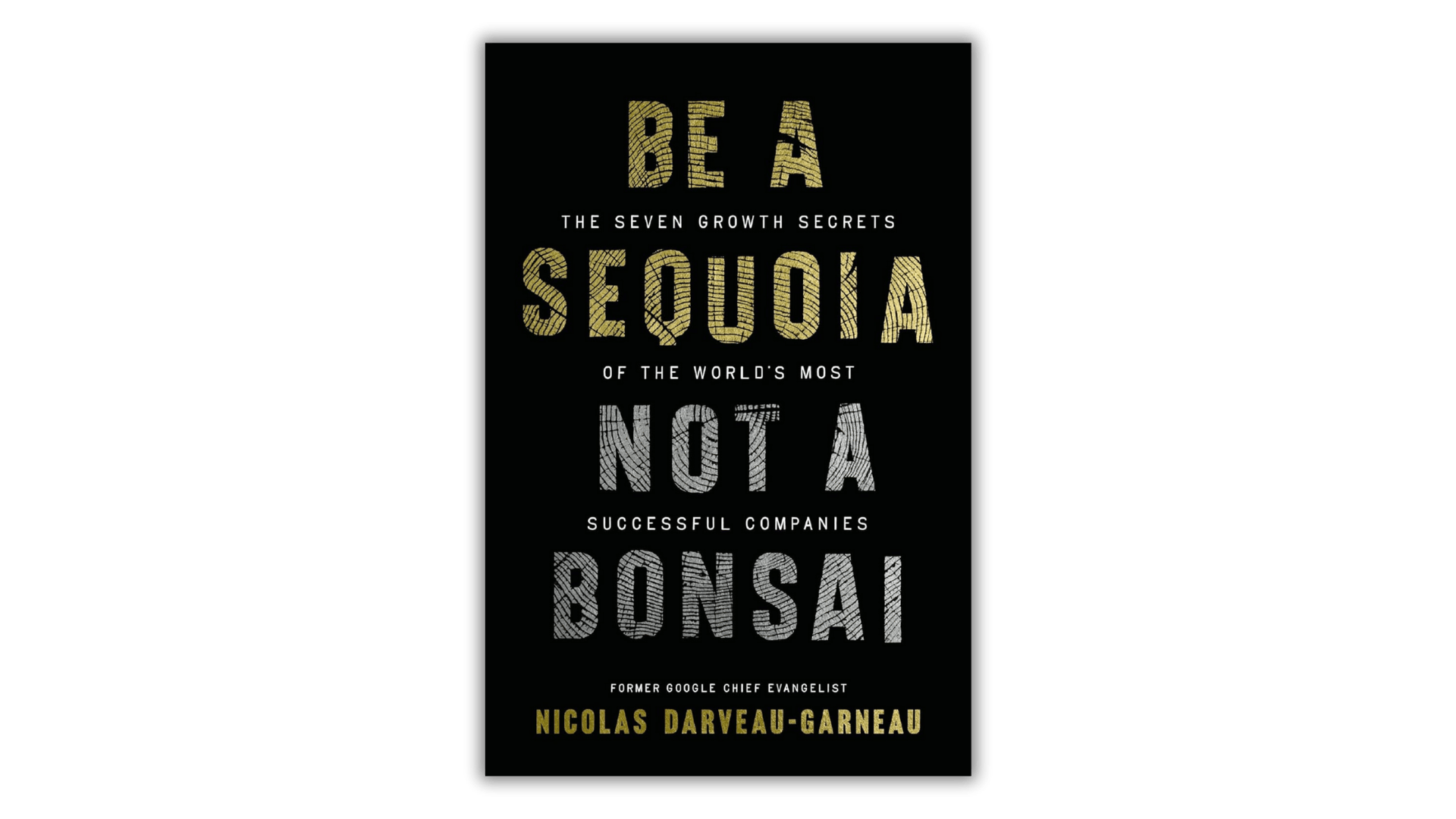
Be a Sequoia, Not a Bonsai: The Seven Growth Secrets of the World’s Most Successful Companies is a business and leadership book crafted to help organizations and leaders think bigger and grow stronger — like a towering sequoia — rather than stunting their potential like a bonsai.
Drawing on the author’s extensive experience advising top executives, this book presents a strategic playbook for sustainable, profitable growth across industries.
Whether you’re a startup founder, corporate leader, nonprofit director, or growth strategist, this review explores the why, what, and how of the book’s core philosophy, practical frameworks, and real-world case examples.
📘 Overview & Big Picture
Author Nicolas Darveau-Garneau served as Chief Evangelist at Google, where he advised more than 1,000 senior executives on digital strategy and growth. From these conversations, he discovered a set of guiding principles common to the fastest-growing organizations. These insights form the backbone of Be a Sequoia, Not a Bonsai, which contrasts short-term optimization (“bonsai thinking”) with the broad, long-term vision of a sequoia.
The book identifies seven strategic moves that propel companies into sustained success — from maximizing profitable growth and prioritizing high-value customers to building powerful brands and evolving faster than competitors. Packed with hundreds of case studies from well-known and emerging companies, the book illustrates how these principles play out in the real world.
🧠 Core Themes & Frameworks
1. Sequoia vs. Bonsai Thinking
The central metaphor challenges organizations to adopt “sequoia thinking” — long-term, growth-oriented, strategic — rather than “bonsai thinking”, which focuses on short-term efficiency and incremental gains. Sequoias create deep roots, grow tall, and spread wide; bonsai are beautiful but constrained. This metaphor underlines the difference between enduring success and temporary performance.
2. Maximize Profitable Growth
Darveau-Garneau stresses tracking the right metrics. Rather than chasing vanity numbers like superficial user counts or short spikes, sequoia organizations monitor the metrics that tie directly to profit and long-term customer value. This shift helps organizations prioritize what actually moves the needle.
3. Acquire Valuable Customers, Not Just Many
Not all customers are equal. The book emphasizes targeting those who deliver the most profitability and long-term engagement rather than accumulating large but low-value audiences. Case studies such as Surex Insurance show how focusing on high-value segments can exponentially increase profits.
4. Deepen Existing Customer Value
Growing revenue from current customers — through upselling, cross-selling, or enhanced service offerings — can dramatically improve lifetime value without the acquisition cost of new ones. Strategic improvements in this area often yield significant returns.
5. Build a Next-Level Brand
Strong branding doesn’t just attract attention — it drives preference and pricing power. The author discusses modern branding strategies that align with customer expectations and competitive advantage, helping sequoia brands endure.
6. Deliver Exceptional Customer Experience
Customer experience becomes a competitive differentiator when competitors falter. Stories like Asbury Automotive Group boosting customer satisfaction through online innovation illustrate how focusing on experiences can build loyalty and advocacy.
⚡ 7. Evolve Faster Than the Market
Innovation and experimentation are core to staying ahead. Leaders who build cultures of rapid testing and adaptation maintain relevance even in disrupted markets. The book frames change not as a threat but as a strategic advantage.
📊 Highlights from Case Studies
While rooted in theory, Be a Sequoia, Not a Bonsai shines through real examples showing how sequoia thinking delivers results:
-
St. Jude Children’s Research Hospital increased online fundraising by 46% in one year, expanding treatment reach to dozens of countries.
-
Invisalign added roughly $7 billion in market value while competitors lagged by optimizing strategic metrics and focus.
-
Surex Insurance quadrupled profits by acquiring higher-value customers rather than prioritizing volume.
-
Pandora Jewelry achieved major revenue increases by shifting how it measured and drove in-store and advertising impact.
🌟 What Makes This Book Stand Out
-
Executive Perspective: The author’s access to and insights from global CEOs and CMOs give the book real-world credibility rather than just academic theory.
-
Actionable Playbooks: Practical steps and frameworks make it easy for leaders to adopt sequoia principles within their own organizations.
-
Broad Audience Appeal: Whether you lead a tech startup, nonprofit, or established enterprise, the seven principles translate across sectors.
-
Data-Driven Mindset: Case studies emphasize results and measurable shifts rather than vague inspirational points.
📌 Limitations & Things to Consider
Because the book is rooted in business leadership and strategy, not every takeaway applies directly to individual personal growth or small projects. Its lessons are most powerful when implemented at organizational scale or within team leadership contexts. Additionally, readers looking for deep academic research may find the case-study approach more tactical than theoretical. However, the trade-off is often greater practical utility.
👥 Who Will Benefit Most?
This book is particularly valuable for:
-
CEOs and senior executives seeking strategic growth insights.
-
Entrepreneurs looking to scale beyond early stages.
-
Growth marketers and brand strategists aiming to measure meaningful impact.
-
Nonprofit leaders wanting sustainable donor engagement strategies.
If you’re leading change or transformation in any organization, the sequoia mindset can help you think long-term, focus on value over scale, and build enduring competitive advantage.
📌 Final Thoughts
Be a Sequoia, Not a Bonsai delivers both inspiration and instruction. Nicolas Darveau-Garneau synthesizes years of executive dialogue into a compelling framework that challenges leaders to grow beyond conventional constraints. With accessible strategies and convincing case examples, this book offers a strategic toolset for anyone determined to shift leadership practice from short-term optimization to enduring, profitable growth.
Whether you’re facing competitive disruption, aiming to redefine your customer value proposition, or simply seeking a clearer growth path, this book provides a thoughtful, tested blueprint.